LIFE IN THE VAST LANE
Upon birth, the North American cumulonimbus cloud rolls down from the Rocky Mountains, and from there, ever eastward into its notorious adult form, scraping along the troposphere with its anvil-like plumage. Cloudforms throughout its abdomen whorl into temporary organs and heatsinks, which can sometimes be seen through the rotational tears in its purpled underbelly. Lightning traverses ion pumps all across the thunderhead's structure, generating a nervous system which is sometimes as complex as that of a cricket, with rudimentary thoughts entangled with what might be called a sense of touch. A metabolic urge to consume warmer waters drives it ever eastward unto death in the Atlantic, leaving behind trails of hailstones as its dung.
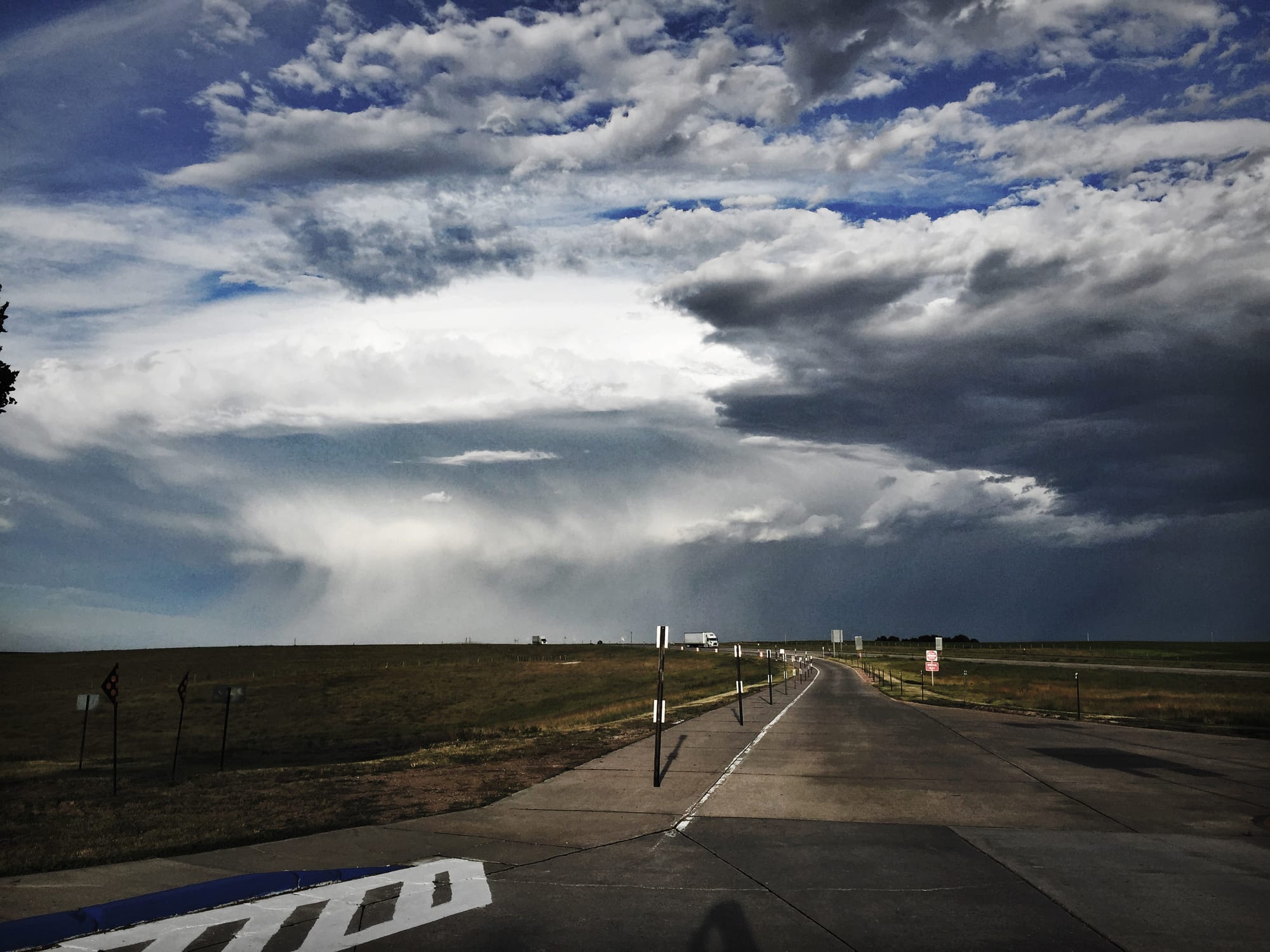
Such storm systems are among several which can be considered to be non-cellular life, gaining their complexities and habits not from organic chemistry, but instead, the properties of water itself when subjected to extreme thermodynamic differentials. Recognizable, macroscopic forms arise, however short-lived, fueled by reservoirs left behind by their ancestors in summers and winters past.
Hurricanes are the most notorious of these storms by whichever regional title they are given. Their consistent body plans, seasonal life cycle, metabolic patterns, and sheer scale of presence have earned them a reputation as a type of “thermobaric spirit” in several ecclesiastical circles, a labeling which has led to them receiving names from the World Meteorological Organization to remind us of their innocence. From a human perspective they bear down on us as catastrophes, bringing hell and high water, but from their own, they beach themselves like whales, unable to find the true rest they seek further north.
To understand something so alien as being alive, we can think with a framework that allows us to see ourselves similarly: we are delicate vessels of dust, diving suits the ocean uses to explore the land, not so different in overall composition from a Floridian tidepool. We boil and crush and melt everything in our path to keep the saltwater within hot, but not so hot that the tubes and valves burst and we spill apart. Electricity flows along columns of differential pressure, compelling reaction and animating the whole of the machine. Our lightning is gentle. We move towards heat until there is none left, and the waters within ourselves cool, distilled once more from ephemeral flesh.
Until the planet itself is bereft of heat, those waters will rise towards the sun again, to become storms once more. We will dissolve together, one with the rain, and our thoughts, however small, will be heard as thunder.
We will forget death.